
Selecting the right golf ball for your swing speed not only impacts ball speed but also significantly influences the launch angle, a key factor in optimizing both the distance and trajectory of your shots.
This guide will help you understand the relationship between swing speed and ball performance, as well as give you some ball recommendations that are available to buy. However, if you’re short on time and want the answer to “What golf ball should I use for my swing speed” straight away, then here you go:
- High swing speeds above 100 mph golfers should opt for high-compression balls like the Titleist Pro V1 for distance and control.
- Golfers with average speeds (85-100 mph) would benefit more from mid-compression balls such as the Titleist Tour Soft or Srixon Q-Star Tour, which balances distance and feel.
- Slower swingers, below 85 mph, should choose low compression balls like the Callaway Supersoft or Wilson Duo Soft, as both will help gain distance without compromising on feel.
What is Swing Speed?

Swing speed, the velocity at which you strike the ball, directly impacts how the ball behaves in flight, its distance, and its feel upon landing. Whether you’re a seasoned golfer with a powerful drive or a beginner working to improve your pace, the type of golf ball you use can either enhance your strengths or expose your weaknesses.
Factors To Understand Before Choosing Your Golf Ball
Choosing the right golf ball is akin to selecting the right set of clubs; it’s essential for optimizing your performance on the course. Over the years, coaching golfers from all walks of life has shown me the profound impact a golf ball can have on a player’s game.
Understanding these factors and how they relate to your game is crucial in selecting a golf ball that complements your playing style. Remember, the goal is to optimize performance, whether that means adding distance, improving feel, or enhancing control.
Ball Speed vs Swing Speed
Understanding the relationship between ball speed and swing speed is essential, as optimizing the ball speed will directly affect your launch angle, crucial for maximizing distance and achieving the desired ball flight either off the tee or into greens.
Ball speed, simply put, is the speed at which the ball leaves the clubface after impact. It’s influenced significantly by your swing speed—the velocity of your clubhead at the moment of impact. However, it’s not a one-to-one relationship.
The efficiency of energy transfer from the club to the ball, known as the smash factor, plays a pivotal role. Higher ball speeds are synonymous with longer distances, but achieving them requires more than just swinging harder. It’s about optimizing your swing for efficient energy transfer.
Compression vs Distance
The concept of ball compression relates to how much a golf ball deforms upon impact. Generally, a golf ball’s compression rating indicates how soft or hard it feels and its potential distance capabilities, influenced by the player’s swing speed.
Different compressions affects both ball speed and the ball’s launch angle, with higher compression balls designed to compliment golfers with faster swing speeds the most, impacting both distance and feel.
High-Compression Golf Balls
High-compression golf balls are designed for golfers with faster swing speeds, typically above 105 mph. Take, for instance, the Titleist Pro V1x. The Pro V1x is a prime example of a high-compression ball that’s favored among professionals and low handicappers.
If you’re in this swing speed category, you can expect high-compression balls to offer longer distances due to less energy loss during deformation. However, they require a strong swing to compress fully and achieve the intended performance benefits.
Mid-Compression Golf Balls
Mid-compression golf balls strike a balance between soft and hard feel, making them suitable for a broad range of players. The Callaway Chrome Soft is a stellar example. Golfers with swing speeds between 85 to 105 mph find these balls offer an optimal mix of distance and feel.
They’re easier to compress than their high-compression counterparts, providing a nice blend of control and yardage without necessitating a tour-level swing speed.
Low-Compression Golf Balls
Low compression balls, like the Wilson Staff Duo Soft, are engineered for players with slower swing speeds, typically under 85 mph. These balls are designed to deform more upon impact, requiring less force to compress, which helps in maximizing distance for slower swingers.
If you’re in this category, you can expect these balls to provide better distance and a softer feel, making them a forgiving option for seniors, juniors, and beginners.
Launch Angle vs Ball Flight
Launch angle is another critical factor, significantly affecting ball flight and overall distance. A higher launch angle, combined with the right spin rate, can significantly enhance carry distance, especially for players with slower swing speeds.
Conversely, faster swingers might benefit from a lower launch angle to prevent excessive ball flight height and loss of distance. For golfers with fast swing speeds (above 100 mph), a slightly lower launch angle can help control ball speed and manage spin, keeping the ball flight lower and maximizing roll upon landing. This control allows for piercing drives that cut through the wind more effectively.
Golfers with average swing speeds (85 – 100 mph) often benefit from a moderate launch angle. This sweet spot maximizes ball speed and distance while maintaining enough height to ensure the ball lands softly on the greens, allowing for more aggressive approaches.
For those with slower swing speeds (below 85 mph), a higher launch angle is key to maximizing distance. Increasing the launch angle helps to compensate for lower ball speeds, ensuring the ball stays in the air longer and travels further. This adjustment is crucial for adding valuable yards to your drives and making longer holes more manageable.
The Importance of Spin Control
Spin control is paramount, regardless of your swing speed.
High spin rates can increase control and stopping power on the green but might reduce distance off the tee due to increased air resistance.
Lower spin rates, on the other hand, can maximize distance by reducing air resistance but may compromise control on approach shots and around the green.
For slower swingers, a ball with moderate spin offers the best of both worlds, enhancing distance while providing enough control for precision shots.
Faster swingers might opt for balls that offer lower spin off the tee but higher spin with shorter irons and wedges, allowing for aggressive shots into greens without sacrificing control.
How to Measure Golf Swing Speed

Using accurate swing data to find your swing speed is crucial when choosing a golf ball that optimizes both ball speed and launch angle. Getting both of these performance areas right will help lower your scores, irrespective of your skill level.
Thankfully, technology today offers several ways to measure swing speed, whether you’re practicing at your local driving range, working with a coach, or even doing some tests at home.
Launch monitors
Launch monitors are the gold standard for measuring swing speed, offering precise data on your swing and the ball’s flight.
These sophisticated devices can give you a comprehensive analysis of your swing, including speed, launch angle, spin, and more. They’re commonly found at well-equipped driving ranges or with professional coaches.
Swing speed radar
A more accessible option for many golfers is the swing speed radar.
These portable devices are designed for personal use, allowing golfers to measure their swing speed directly. They’re a great tool for those looking to track their progress over time without the need for a full launch monitor setup.
Driver distance method
For a quick and easy estimate of your swing speed, you can use the driver distance method.
After hitting ten or more solid drives, calculate the average distance of these shots. Dividing this average distance by 2.3 gives you an approximate idea of your clubhead speed, plus or minus a few MPH.
This method doesn’t replace professional measurement tools but offers a ballpark figure to guide your golf ball selection.
Matching Your Swing Speed to a Golf Ball
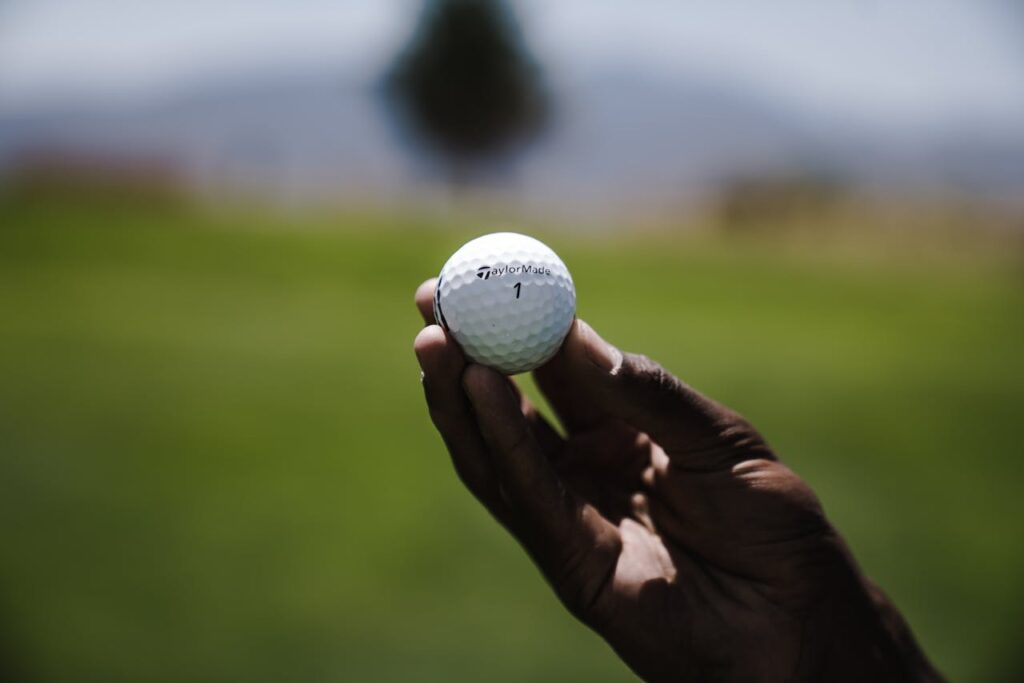
Using a golf ball that matches your swing speed can significantly impact your game, offering benefits in terms of distance, control, and overall performance. However, it’s essential to understand that not all golf balls are created equal, and the right choice can vary depending on your specific swing characteristics.
Faster swing speeds (above 100 mph)
High-compression golf balls are not only best for maximizing ball speed, they also help control the launch angle for golfers with faster swing speeds. This offers greater distance and more control for those with faster swings.
These balls are designed to offer less spin off the tee, resulting in longer, straighter drives. A recommended ball for this category is the Titleist Pro V1. It’s engineered for high-speed swings, providing exceptional distance, consistent flight, and excellent greenside control.
Average swing speeds (85 – 100 mph)
For those with average swing speeds, mid-compression balls are best as they are optimized to provide ideal ball speed and launch angle, ensuring a balanced performance between distance and control.
The Titleist Tour Soft is an excellent option, providing impressive distance and a soft feel for enhanced control around the greens. Another great choice is the Srixon Q-Star Tour, known for its balanced performance, offering good distance off the tee and exceptional spin control for approach shots.
Slower swing speeds (below 85 mph)
Golfers with slower swing speeds, including many seniors and female golfers, will find that low-compression balls help increase their ball speed and optimize their launch angle. These balls are designed to maximize distance and improve feel, even at lower swing speeds.
Featured as one of our best golf balls for seniors, the Callaway Supersoft is an ideal choice, known for its super low compression core that maximizes ball speed. Another recommended ball is the Wilson Duo Soft, which combines a low-compression core with a soft feel, making it easier to achieve longer distances and improved accuracy.
Considering the Types of Golf Balls for Swing Speed.
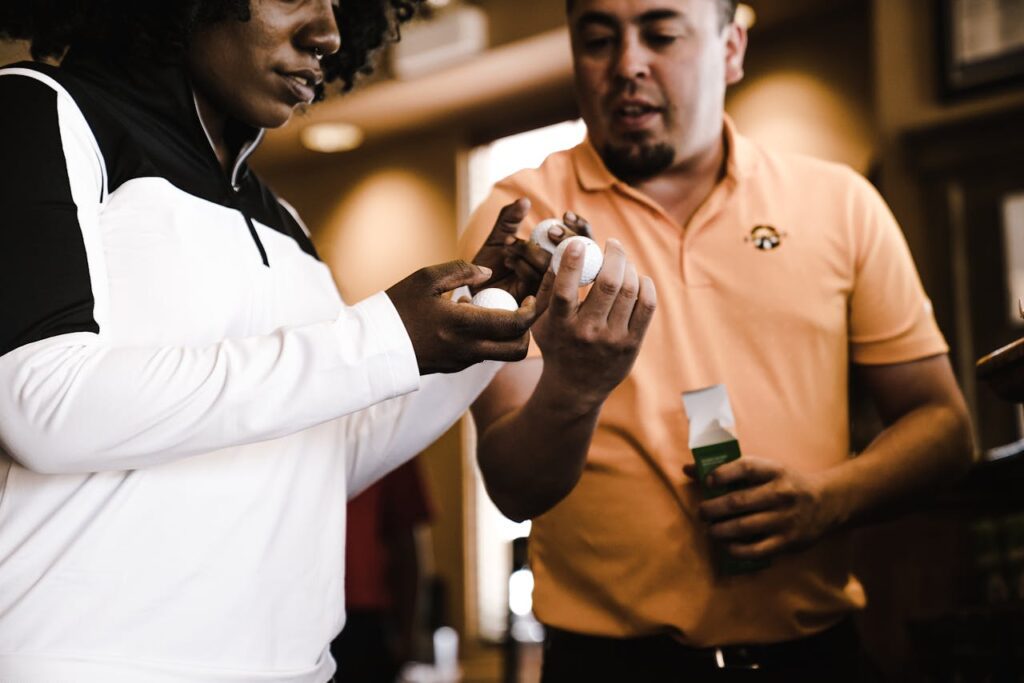
Distance Golf Balls
Distance golf balls are specifically engineered to maximize ball speed and also get the right launch angle for tee or fairway shots. This is a crucial combination for golfers aiming to achieve maximum distance.
For golfers with faster swing speeds, these balls can add extra yards but may sacrifice a bit of control due to lower spin rates. Those with average swing speeds might see a significant improvement in distance without a notable loss in accuracy.
However, golfers with slower swing speeds might not benefit as much from distance balls, as these balls are optimized for higher speeds.
A prime example of a distance golf ball is the Titleist Velocity, known for its high-speed core and aerodynamic design, making it a quintessential distance ball.
Control Golf Balls
While control golf balls focus on spin and accuracy, they are designed to maintain a competitive ball speed for precision play. Fast swingers may find these balls offer too much spin, leading to potential control issues off the tee.
However, for average swing-speed golfers, control balls can offer an excellent mix of distance and precision, allowing for more strategic plays. Slow swingers will appreciate the increased control around the greens, although they might sacrifice some distance.
The Callaway Chrome Soft exemplifies a control golf ball, thanks to its Dual SoftFast Core that promotes high launch and low spin off the tee while maintaining excellent control and spin around the greens.
Soft Golf Balls
Soft golf balls offer an improved feel without significantly sacrificing ball speed or launch angle too, making them suitable for golfers across all swing speed categories. They are designed for a softer feel at impact, which can enhance control and provide a more satisfying experience, especially on and around the greens.
Golfers with faster swing speeds might not prefer soft golf balls as they can compress the ball too much, leading to reduced distance. Those in the average swing speed category often find soft golf balls to be a good compromise, offering a pleasant feel without a significant loss in performance. Slower swing speed golfers benefit the most, as these balls can provide a boost in distance due to better energy transfer at lower speeds.
The Wilson Duo Soft is an excellent example of a soft golf ball, offering super low compression for maximum softness and improved playability for golfers with all types of swing speeds.
The Construction of a Golf Ball for Swing Speed
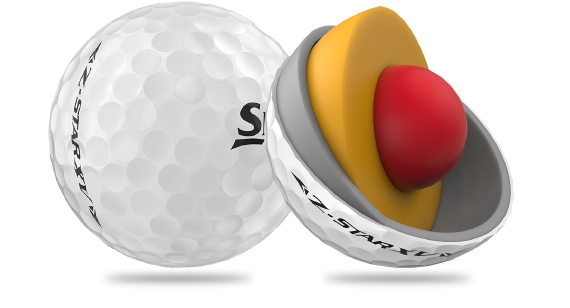
Understanding how the construction of a golf ball—from two-piece to multi-layer—affects ball speed and your launch angle is vital for choosing the right ball for your swing speed.
Two-piece golf balls
Two-piece golf balls consist of a large, solid core encased in a durable cover, typically made of Surlyn or ionomer. These balls are designed for durability and distance, making them an ideal choice for beginners and golfers with slower swing speeds.
The robust construction promotes a lower spin rate, which helps in achieving straighter shots with a lovely launch angle off the tee.
Three-piece golf balls
Three-piece golf balls add an additional layer between the core and the cover, allowing for more spin control and a better feel compared to two-piece designs.
This construction is popular among tour and club-level golfers with average to fast swing speeds. It offers a good balance of distance and control, making it suitable for players looking to fine-tune their game.
Four-piece golf balls
Four-piece golf balls are designed with an additional inner layer, each serving a distinct purpose: to provide distance, control spin, enhance feel, and optimize flight.
The recent Pro V1x model is an example of a four-piece ball that offers higher spin and a higher trajectory than its three-piece counterparts. These balls are best suited for golfers with high swing speeds, who can take advantage of the advanced technology to optimize their performance across all aspects of their game.
Five-piece golf balls
The most engineered construction available. Five-piece golf balls are made to offer the ultimate in performance customization, with each layer contributing to different flight conditions, spin rates, and feel characteristics.
These balls are designed for the most discerning and skilled golfers, typically those with high swing speeds who demand precise control over every shot and a complimenting launch angle.
The TaylorMade TP5 and TP5x models are notable examples, providing unparalleled control and feel without sacrificing distance.
Balancing Distance and Feel
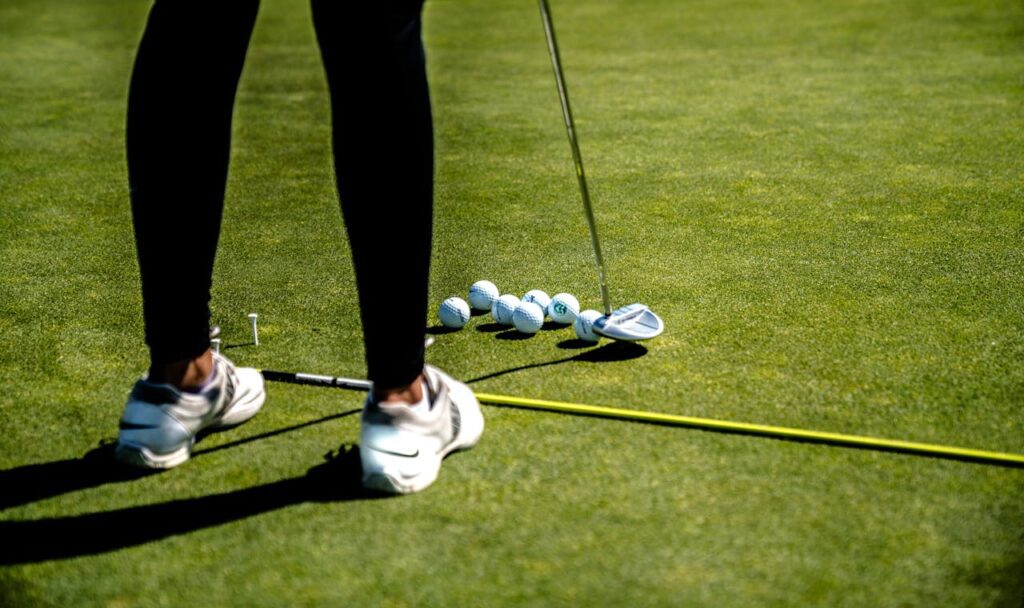
In the quest for the perfect golf ball, every golfer faces the dilemma of balancing distance with feel. It’s a trade-off where the quest for extra yards off the tee can often come at the expense of a soft feel and control around the greens.
However, understanding this balance and how it aligns with your personal preferences and swing speed is crucial for optimizing your performance on the course.
Golf ball cover material and how it affects your golf ball
The material used in the golf ball’s cover significantly impacts its performance, particularly in terms of feel and spin.
Urethane
Urethane-covered golf balls are the choice of many tour professionals and low-handicap golfers because of their superior feel and spin control around the greens.
The softer cover of a urethane ball allows for more significant interaction with the clubface grooves, resulting in higher spin rates and better stopping power on the green.
However, this softer material is more prone to scuffs and wear, often showing signs of use after just one round. Despite this, for golfers prioritizing control and feel, the trade-off is well worth it.
A urethane ball is more likely to scuff and show wear. Often only looks ‘as new’ for one entire 18-hole round.
Surlyn
Surlyn covers, typically found on two-piece golf balls, are engineered for durability and distance. While these balls may not offer the same level of spin and feel as urethane-covered balls, they excel in providing straighter flight paths and resisting cuts and scuffs.
Surlyn balls are an excellent choice for golfers seeking longevity and performance, especially those with higher swing speeds or those who are more prone to stray shots.
The robust nature of Surlyn ensures the ball remains in play-ready condition for longer, making it a cost-effective option for the average golfer.
Conclusion
For golfers with fast swing speeds above 100 mph, golfers often choose of a high-compression golf ball like the Titleist Pro V1. This ball is designed to minimize spin off the tee, maximizing distance while still providing the necessary control and feel around the greens. Golfers with a faster mph swing need a ball that can cope with the force at impact, offering precision but with a ball speed that achieves those hard-earned yards.
Average swing speed golfers, those between 85 to 100 mph, have a wider range of options. Mid-compression balls such as the Titleist Tour Soft or Srixon Q-Star Tour strike the perfect balance between distance off the tee and control on approach shots. These types of balls offer the versatility needed to help to a broad spectrum of playing styles, providing a blend of performance characteristics that support both distance-seeking and precision playing.
Slow-swing speed golfers, with speeds below 85 mph, will find that low-compression golf balls like the Callaway Supersoft or Wilson Duo Soft give them the extra ball speed and extra yards they are seeking. These balls are engineered to maximize energy transfer at lower speeds, enhancing distance and improving feel. For these players, selecting a ball that complements their swing speed is vital for achieving optimal performance, ensuring each shot feels good off the clubface and travels further, making the game more enjoyable and competitive.
I hope you found this useful.


