


In this guide, we’ll discuss the key features commonly found with the best golf ball for 90 mph swing speeds. I’ll explain the importance and relevance of things like compression, construction, and cover material – and also share stories from my days of coaching too.
Picking the right golf ball is as important as choosing the right club, especially when your swing speed hovers around the 90 mph mark, which is quite typical for an average golfer. The choice isn’t just about brand; it’s about picking a ball that complements your swing dynamics and playing style.
It doesn’t matter if you’re looking for more distance, better control, or a softer feel around the greens – understanding the technology and characteristics of a golf ball can make all the difference to your choice.
As an ex-golf coach who’s spent countless hours on the course and in coaching sessions, I’ve seen firsthand how the right golf ball can quickly help a player’s game. So, let’s tee up and find the right golf ball for you!
My Recommendation:
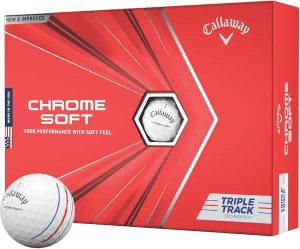
Callaway Chrome Soft Golf Balls
The best golf ball for 90 mph swing speed is, by far, the Callaway Chrome Soft. This golf ball offers an exceptional balance between distance and control, making it a standout choice for all areas of your game.
It features a Graphene-infused Dual SoftFast Core, which basically means it’s excellent at maximizing the energy transfer at strike for higher launches and lower spins, leading to longer, straighter drives and longer shots.
Plus, its soft urethane cover provides tour-level feel and excellent control around the greens.
Understanding Swing Speed and Its Impact on Golf Ball Performance.
Swing speed is a critical factor in golf that suggests not only the choice of your clubs, but also your golf balls.
With a swing speed around 90 mph, you’re positioned within a common range for many amateur golfers – a speed that blends potential power with precision.
But why does swing speed matter when selecting a golf ball?
- Swing Speed Dynamics: Swing speed affects how the ball compresses upon impact. When the golf ball is struck, the force of the swing compresses the ball, which temporarily deforms before springing back and launching into the air. The rate at which it does this can significantly influence both the distance it travels and its flight characteristics.
- Compression and Swing Speed: For a swing speed of 90 mph, medium compression golf balls are typically recommended. These balls provide a balanced performance, offering sufficient compression for good distance without sacrificing control. A ball with too high compression may not deform adequately at impact, leading to reduced efficiency and shorter drives. Conversely, a ball with too low compression might over-compress, resulting in excessive spin and less control.
A mistake I see players make is choosing high-compression tour-level balls because they ‘believe’ they are the best and, automatically, will improve their game. However for most players with swing speeds around 90 mph, a bit less ball compression tends to result in noticeably better control and overall distance.
Typically, golfers with a 90 mph swing speed tend to be able to drive the ball around 225 to 245 yards, and hit their 7 iron around 140 to 160 yards. These distances are ideal benchmarks when evaluating the performance enhancements that different golf balls can provide.
So, by selecting the right compression for your speed, you will ensure that the energy from your swing is effectively transferred to the ball, maximizing both distance potential and accuracy.
Key Characteristics of Golf Balls for 90 mph Swing Speed
Selecting the right golf ball involves understanding the different elements of a golf ball that directly influence performance on the course.
For golfers with a swing speed around 90 mph, it’s important to understand the role elements such as compression, construction, cover system, and durability could influence your game.
Here’s a breakdown of each to help you choose the most suitable golf ball for your game:
Compression
- What It Is: Compression measures the deflection a golf ball undergoes when it is struck. It’s a good indicator of how much energy transfer will occur from the swing to the ball.
- Why It Matters: For a 90 mph swing speed, a medium compression ball (typically rated between 80 and 90) is ideal. This level of compression ensures that the ball is not too hard, allowing for adequate flex but firm enough to travel a significant distance.
- Top tip: During fittings, I often notice that golfers with this swing speed achieve the best balance of distance and feel with medium compression balls. The ball compresses just enough to maximize distance while maintaining a great feel and control.
Golf Ball Construction
- What It Is: This refers to the internal layers and overall design of the golf ball, ranging from one-piece to multi-layer constructions.
- Why It Matters: Two and three-piece golf balls are typically suited for players with a 90 mph swing speed. These balls offer a great mix of distance and control, with layers designed to promote better spin control and feel.
- Top tip: I recommend trying out a three-piece ball if you’re looking to improve spin rates on greenside shots without sacrificing too much distance. It strikes a nice balance for players who enjoy both aspects of the game.
Golf Ball Cover System
- What It Is: The cover of the golf ball affects everything from durability to how it feels upon impact.
- Why It Matters: Urethane covers are generally preferred by players looking for premium performance, providing a softer feel and better spin control, which is crucial for shots around the green.
- Top tip: From coaching sessions, I’ve observed that players appreciate the urethane cover’s responsiveness, especially during short games. It offers a superior feel and control, which can significantly influence scoring.
Durability
- What It Is: Durability refers to how well the golf ball withstands play over time, maintaining its performance qualities.
- Why It Matters: Durable golf balls not only save money over time but also ensure consistent performance throughout a round.
- Top tip: I’ve seen many players frustrated by balls that easily scuff and lose their performance features. Opt for balls known for their durability to avoid compromising your game.
Price
- Why It Matters: While not a physical characteristic of the ball itself, price is a crucial factor to consider. Investing in golf balls that match your budget and playing frequency can significantly affect your satisfaction.
- Top Tip: Balance cost with your level of play. Casual players might not benefit as much from high-priced balls as a competitive amateur who plays regularly.
The Best Golf Ball for 90 Mph Swing Speed
These are the five best golf balls for 90 mph swing speed. Depending on what you need from your game, they are also suitable for those with a 95 mph swing speed.
I have made sure all golf balls are durable, priced well, and still offer forgiveness for miss-hits.
Prices range from $25 (£20) through to $45 (£40) per box, but all very close when it comes to technology and game improvement.
1. Callaway Chrome Soft
As a golfer swinging around 90 mph, the Callaway Chrome Soft might just be the perfect match. It’s no surprise that this ball boasts a stellar 4.8-star rating on Amazon from over 2,500 reviews; its performance speaks for itself.
The Chrome Soft strikes a delightful balance between distance and feel, which is often a challenging combo to nail for mid-speed swingers. Its Dual SoftFast Core aids in achieving higher launch and low spin on long drives, translating to impressive distances that don’t compromise on the fairway accuracy.

When it comes to the short game, the ultra-soft urethane cover comes into play, providing a superbly soft feel and increased spin for greater control around the greens.
This golf ball is particularly well-suited for players who enjoy a soft feel but don’t want to lose out on distance. It’s designed to perform across all facets of the game, making it a versatile choice for consistent golfers aiming to improve or maintain their performance.
So whether you’re a competitive amateur or a dedicated weekend warrior, the Callaway Chrome Soft is engineered to boost your game, particularly if your swing speed is right around that 90 mph sweet spot. It’s a high-quality golf ball that promises to enhance both your long and short game.
Positives
- Exceptional control on approach and greenside shots.
- Consistent and penetrating flight path.
- Soft feel enhances overall playability and comfort.
Drawbacks
- Premium pricing may not appeal to all budgets.
- Might be too soft for players preferring a firmer feedback.
2. TaylorMade TP5
The TaylorMade TP5 is one of the best mid-compression tour-approved golf balls available.
TP5’s are 5-piece golf balls, which is rare because most four and 5-piece golf balls are high compression. But, the TP5’s unique design makes it a prevalent choice for 90mph swing speeds.
The mid-compression Tri-Fast Core delivers exceptional ball speeds with less drag. As a result, players achieve more distance compared to other mid-compression balls.

Ball speed is further enhanced thanks to the speed layer design system. Each layer increases in stiffness, which results in more energy. This increased energy then promotes faster ball speeds for more distance.
The cover of the TP5 is an ultra-soft cast urethane cover. This isn’t only durable; it ensures a soft feel and greenside control when chipping. Furthermore, the TP5 offers a mid-launch ball flight which is ideal for 90mph swing speeds.
If distance is what you are after, then look no further than the TP5 by TaylorMade. Alongside the Chrome Soft, this will be by far the best golf ball for 90 mph swing speed.
3. Bridgestone e6
Bridgestone continues to impress with each new golf ball that the brand releases. Players such as Tiger Woods and Bryson Dechambeau trust Bridgestone, so they must be good.
The new and improved e6 by Bridgestone is a mid-compression golf ball. It has properties that tick the boxes for the distance and soft feel 90mph swing speeds.
The e6 features a simple 2-piece design which also delivers faster ball speeds. Bridgestone also provides an exceptional feel thanks to a large easy to compress soft core.

The Surlyn cover system of the e6 meets my durability and feel expectations. You can also get an optic yellow version for those who prefer that color.
The e6 retails at a very affordable price point, promoting great value for money. Many golfers who use the e6 have reported noticeable improvements to their game. The improvement stories shared were more around long game accuracy.
4. Srixon Q Star
The Srixon Q-Star is a standout choice for those with a swing speed around 90 mph, offering a blend of performance features that cater specifically to players who need a balance between distance and feel.
This ball is engineered with Srixon’s Spin Skin technology, which provides exceptional greenside spin without sacrificing the ability to hit longer drives. Its 338 Speed Dimple pattern reduces drag, promoting a more penetrating ball flight that’s stable even in windy conditions.
Golfers who’ve swung their clubs with these balls note a significant improvement in their control and overall shot consistency.

The Energetic Gradient Growth Core delivers a firmer outer layer that progresses to a softer core, ensuring maximum distance without losing out on the responsive feel upon impact.
Overall, the Srixon Q-Star is highly recommended for mid-handicappers and anyone with a swing speed around 90 mph looking for a reliable, all-around performance golf ball. It effectively bridges the gap between tour-level control and amateur-friendly playability.
Positives
- Excellent spin control with greenside versatility.
- Aerodynamic dimple design for a stable flight.
- Balanced performance suitable for a wide range of players.
Drawbacks
- Some players might find it slightly firmer than other tour balls.
- May not provide the extreme distance of specialized distance balls.
5. Titleist AVX
The Titleist AVX is a premium golf ball that’s been a game changer for many, especially those with a swing speed around 90 mph.
Known for its breakthrough core, casing layer, and aerodynamic technologies, the AVX offers low spin and high speed, with a remarkably soft feel that many golfers want.
This ball is designed for those who seek distance without sacrificing the soft feel on all shots. The AVX utilizes a high-flex casing layer that enhances speed and controls spin to help you achieve greater distance. Also, its unique catenary aerodynamic design delivers a piercing, low ball flight that holds its line in the wind.

For the short game, the AVX shines with its soft urethane cover that facilitates exceptional spin and control on the greens, allowing for aggressive shots into the pin with confidence. The soft feel extends to the putter face, providing a satisfying touch that complements a precision-based short game.
Overall, the Titleist AVX is ideal for golfers with a 90 mph swing speed looking for low spin and maximum distance combined with a soft feel. It’s a top choice for serious players who demand high performance in every aspect of their game.
Positives
- Low flight trajectory with consistent ball flight characteristics.
- Enhanced distance due to low spin on long shots.
- Exceptional feel and control on greenside shots.
Drawbacks
- Premium price point may not suit all budgets.
- Lower trajectory might not be ideal for players who need high launching shots.
Questions Often Asked When Shopping for The Best Golf Ball for 90 mph Swing Speeds.
Picking your way through the golf ball world can be tiring and confusing, especially when you’re trying to match one to your swing speed.
In this section, I’ll share some of the most common questions I’ve been asked by golfers with 90 mph swing speeds, including how construction affects performance, and the benefits of different materials.
What is the best golf ball for a 90 mph swing speed to maximize distance?
If you’re clocking a swing speed around 90 mph, like many of the players I coach, I often recommend the Titleist Tour Soft or the Callaway Chrome Soft.
These medium compression balls are just right for getting that extra bit of distance without sacrificing feel. They strike a perfect balance, unlike higher compression balls such as the Titleist Pro V1x, which might not compress enough at this speed, costing you some valuable yards.
On the flip side, softer balls like the Wilson Duo Soft could create too much spin, making your drives shorter and less controlled.
In my experience, sticking with something in the middle, like the Tour Soft or Chrome Soft, gives you the best shot at both distance and accuracy on the fairway.
How does the construction of a golf ball affect its performance for someone with 90 mph swing speed?
When you’re choosing a golf ball, think of its construction like the engine of a car. For those of us swinging around 90 mph, a three-piece golf ball typically hits the sweet spot.
Three piece golf balls are complex enough to give you good control on your spin and feels off the tee, without being over-engineered for your speed.
It’s like having a well-tuned car that’s just right for everyday driving – it performs reliably without the bells and whistles that only pros really need.
What are the benefits of using a urethane cover golf ball compared to other materials?
If you’ve ever felt like your short game could use a little extra finesse, a urethane cover golf ball might be your answer.
Urethane material is top-notch for providing a softer feel and more spin control, especially around the greens. It’s like putting high-performance tires on your car for better grip – it lets you handle your approaches and pitches with precision, making it easier to play like a pro.
Will there be a significant difference between premium and low-priced golf balls for 90 mph swing speeds?
Absolutely! Think of it this way: investing in premium golf balls is like choosing designer wear – it’s about quality and performance.
These balls often feature advanced technology that can really tune up your game, offering better control, distance, and consistency.
While budget balls are fine for casual rounds, the premium ones can give you that edge in competition, making them worth the extra dollars if you play seriously.
How can I tell if a golf ball is too hard or too soft for my swing speed?
Here’s a quick tip: if the ball feels like it’s slapping your club at impact, it’s probably too hard. On the other hand, if it feels mushy and doesn’t seem to go anywhere, it’s too soft. The right golf ball should feel solid and lively off your club.
It’s all about finding that middle ground where the ball feels great and plays great, helping you hit those satisfying, crisp shots.
How will I know if the golf ball I choose isn’t suitable for a 90 mph swing speed?
You’ll know a ball isn’t right for you if it doesn’t feel good off the tee or if your shots are consistently off target.
Maybe you’re not getting the usual distance, or your approach shots just don’t stick like they used to. It’s like when something feels off with your favorite car – you know how it should drive, and when it doesn’t, it’s time for a check-up.
The same goes for golf balls; if they’re not performing, it’s time to try something more suited to your swing speed.